
Introduction
Vacuum tumblers are essential machines used in modern meat processing plants. They improve marinade absorption, enhance flavour distribution and increase product yield. These machines are commonly used for products such as ham, bacon, poultry and ready-to-cook marinated meat.
By using vacuum technology combined with gentle tumbling action, processors can significantly improve the quality, texture and consistency of meat products.
Understanding how vacuum tumblers work helps meat processors optimise production efficiency and achieve better product quality.
What Is a Vacuum Meat Tumbler?
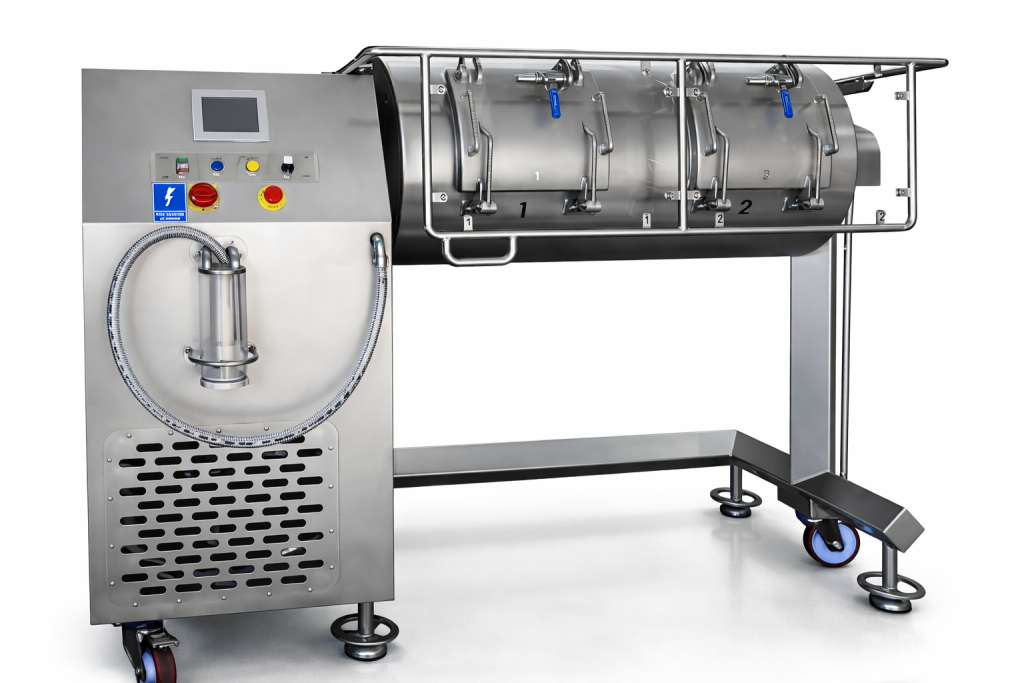
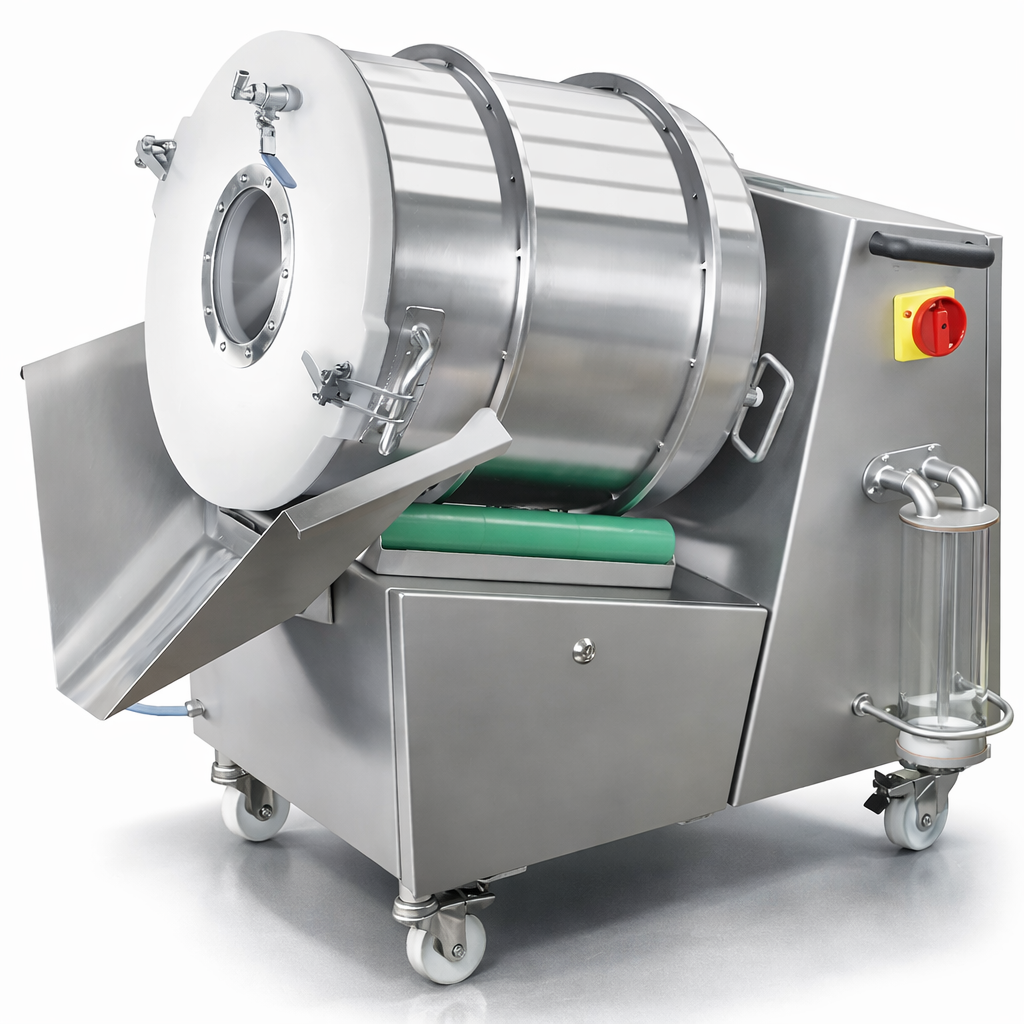
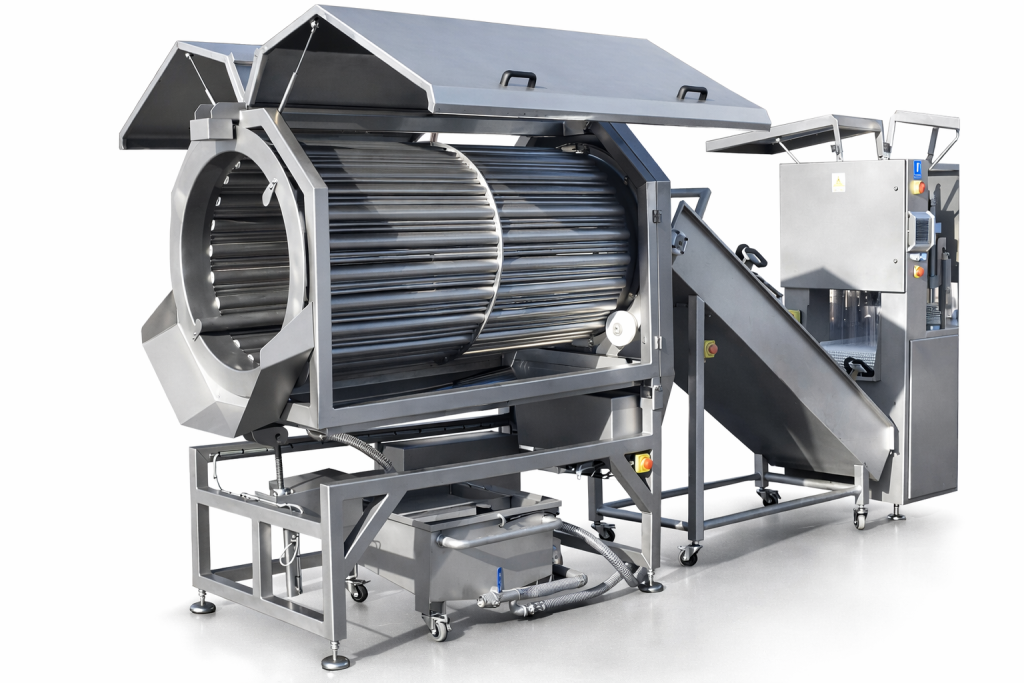
A vacuum meat tumbler is an industrial machine designed to massage meat products inside a rotating drum under vacuum conditions.
The drum slowly rotates while the vacuum removes air from the meat structure. This process allows marinades, brines and seasoning solutions to penetrate deeper into the muscle fibres.
Vacuum tumblers are widely used in food processing plants producing:
- cooked ham
- bacon
- poultry products
- marinated meats
- ready meals
- seafood products
By applying controlled mechanical action under vacuum, the tumbler improves protein extraction and allows meat pieces to bind together more effectively.
How Vacuum Tumbling Works
The vacuum tumbling process combines several key mechanisms that work together to improve meat processing.
First, meat products are placed inside a stainless steel rotating drum. The drum is then sealed and a vacuum pump removes air from the chamber.
Under vacuum conditions, the structure of the meat expands slightly. This creates small spaces within the muscle fibres, allowing brine or marinade to penetrate more effectively.
As the drum rotates, the meat pieces gently tumble against each other and against the drum walls. This mechanical action massages the meat and helps distribute the marinade evenly throughout the product.
The tumbling motion also activates natural proteins in the meat. These proteins act as binding agents that improve product cohesion and texture.
Benefits of Vacuum Tumbling
Vacuum tumbling provides several important advantages for meat processors.
Improved Marinade Absorption
The vacuum environment allows marinades and brines to penetrate deeper into the meat structure. This ensures uniform flavour distribution and consistent product quality.
Increased Yield
Vacuum tumbling can significantly increase product yield by improving water and marinade retention. This results in higher finished product weight and reduced processing losses.
Better Texture
The tumbling action extracts proteins from the meat surface, helping pieces bind together during cooking. This improves sliceability and final product texture.
Reduced Processing Time
Compared to traditional marination methods, vacuum tumbling can reduce processing times while achieving better results.
Vacuum Tumblers in Industrial Meat Processing
Vacuum tumblers are commonly used together with other meat processing equipment such as meat injectors.
In many production lines, the process begins with brine injection using a multi-needle meat injector. The injected meat is then transferred to a vacuum tumbler where the marinade is distributed evenly throughout the product.
This combination of injection and vacuum tumbling allows processors to achieve consistent flavour, improved yield and optimal product texture.
Industrial vacuum tumblers are available in various sizes depending on production capacity. Small processors may use tumblers with capacities of a few hundred litres, while large factories operate tumblers exceeding several thousand litres.
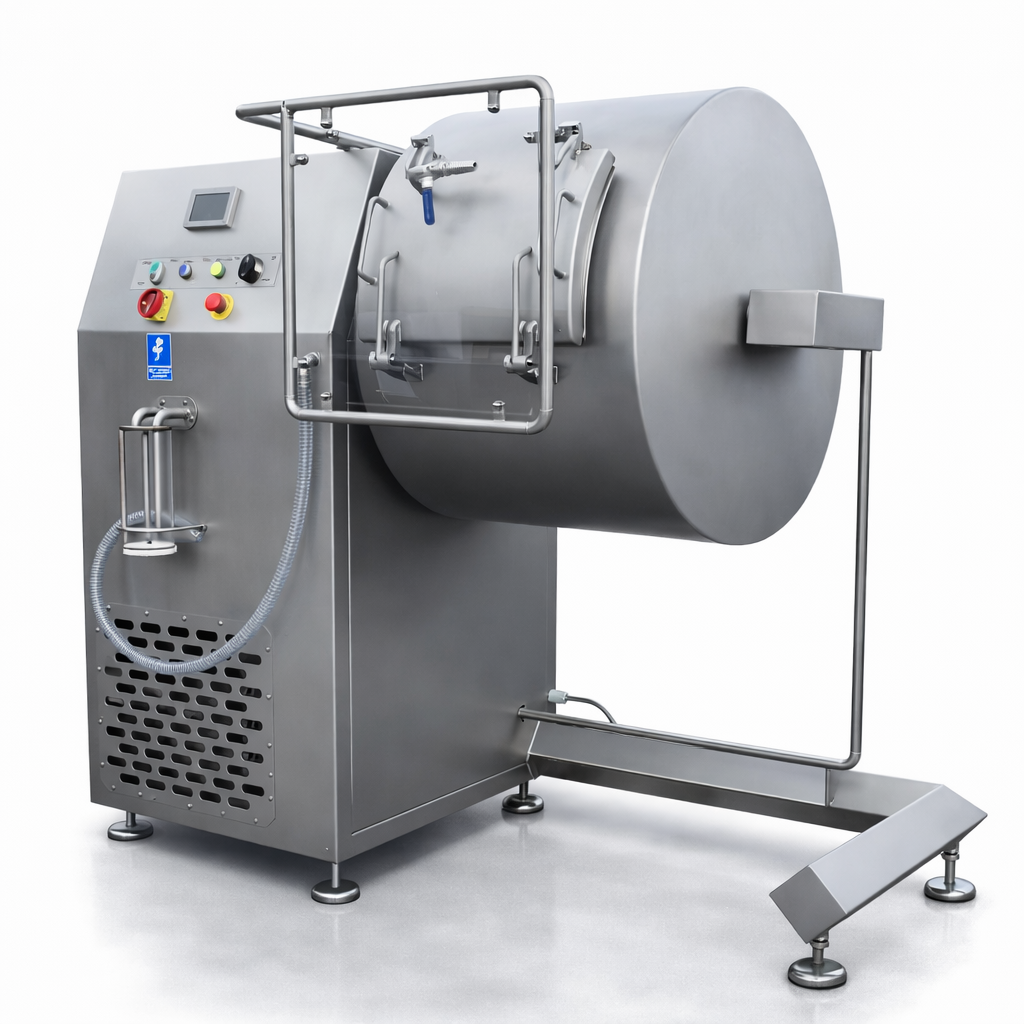
Modern vacuum tumblers are typically made from stainless steel and include programmable control systems that allow operators to adjust vacuum level, rotation speed and processing time.
Applications of Vacuum Tumblers
Vacuum tumblers are widely used across different segments of the meat processing industry.
Typical applications include:
- cooked ham production
- bacon processing
- poultry marination
- marinated meat products
- ready-to-cook meals
- seafood processing
In poultry processing, vacuum tumblers are often used to distribute marinades in chicken fillets and portions.
In pork processing, tumblers help distribute curing brine in products such as ham and bacon.
Fish processors also use vacuum tumbling technology to improve seasoning distribution and product consistency.

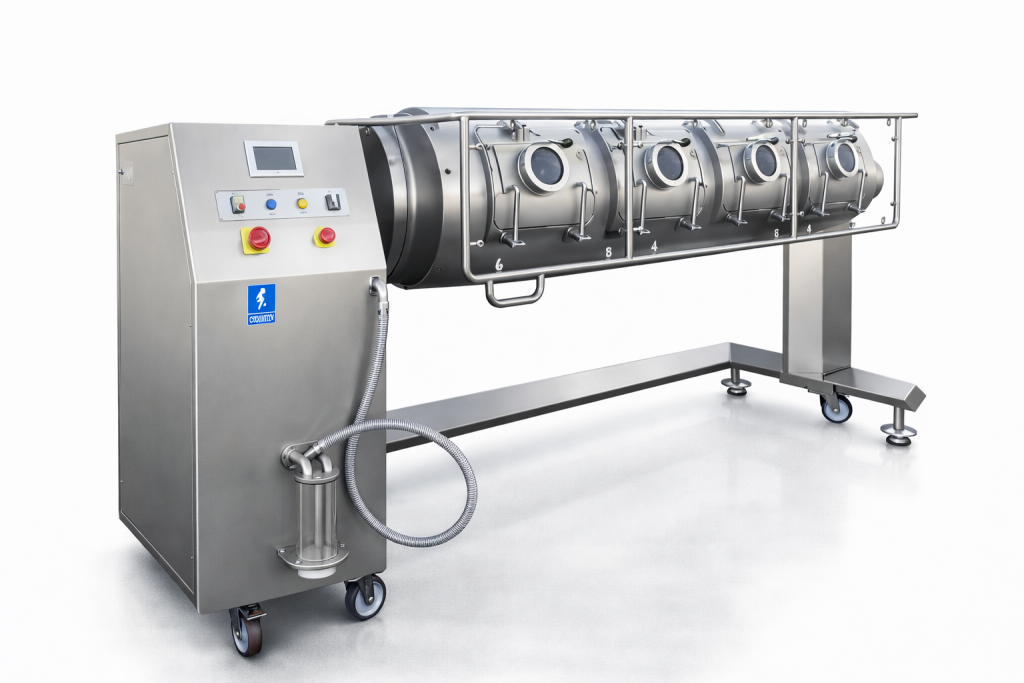
Key Features of Industrial Vacuum Tumblers
Modern vacuum tumblers are designed to operate efficiently in demanding industrial environments.
Common features include:
- stainless steel drum construction
- programmable control panels
- adjustable vacuum levels
- variable drum rotation speed
- automatic loading and unloading systems
- cooling or refrigeration options
These features allow processors to control the tumbling process precisely and maintain consistent product quality.
Conclusion
Vacuum tumblers play a crucial role in modern meat processing operations. By combining vacuum technology with controlled mechanical tumbling, these machines improve marinade distribution, increase product yield and enhance final product quality.
When used together with equipment such as meat injectors, vacuum tumblers allow processors to achieve efficient and consistent production results.
As demand for high-quality processed meat products continues to grow, vacuum tumbling technology remains an essential part of industrial food processing.
Explore our range of industrial vacuum tumblers designed for professional meat processing plants.